
```html
✍️ By Sebastian Hertlein | 📅 Updated: April 2026 | ⏱️ 9 min read
Most people completely botch the marketing director raise conversation. And I mean completely. They walk in asking for a 10% bump when the real problem has nothing to do with percentages. Look, if you’re already running marketing for two businesses – setting strategy, managing vendors, owning budgets, driving revenue – you’re not underpaid by a little bit. You’re misclassified by a job title. That distinction? Worth roughly $40,000 to $60,000 a year.
PayScale data shows the median gap between a Marketing Manager and a Marketing Director sits at around $60,000 annually. So if you’re asking for a 5% bump on a manager salary, you’re potentially leaving $56,000 on the table every single year by not addressing the structural problem first. Honestly, that number still surprises me every time I say it out loud.
Nobody’s really answered this properly online either. I went digging through the top search results for this topic and found pages with 174 words, zero headings, zero actual guidance. Basically just filler. So I figured – fine, let’s actually answer it.
Quick Answer: If you’re running marketing for two businesses on an hourly wage, don’t lead with a percentage raise. Reclassify the role from manager to director first, document your multi-business ROI, then negotiate a salaried structure with a 15–20% compensation bump tied to that expanded scope. In that order.
📑 In This Article:
- Why You’re Not Underpaid, You’re Misclassified
- What Does a Fair Marketing Director Raise Salary Look Like?
- How Do You Negotiate a Marketing Director Raise That Actually Works?
- The Honest Downsides (And How to Handle Them)
⚡ TL;DR – Key Takeaways:
- ✅ Managing two businesses on hourly pay is a misclassification problem, not just a pay problem. Fix the title and structure first, then negotiate salary.
- ✅ A 15 to 20 percent raise is reasonable when taking on multi-business marketing responsibilities. Anything under 10 percent for expanded scope is below standard.
- ✅ Negotiation success rates improve by 40 percent when backed by data, according to a Harvard Business Review study by Deepak Malhotra (2023).
- ✅ Marketing automation tools reduce multi-role workload by up to 40 percent, which you should frame as strategic leverage, not just task efficiency.
Why You’re Not Underpaid, You’re Misclassified
Here’s what most salary guides get completely wrong. They tell you to pull up some market data, benchmark your pay, and ask for 10–15%. Fine advice – if your job title actually reflects what you do. But what if it doesn’t?
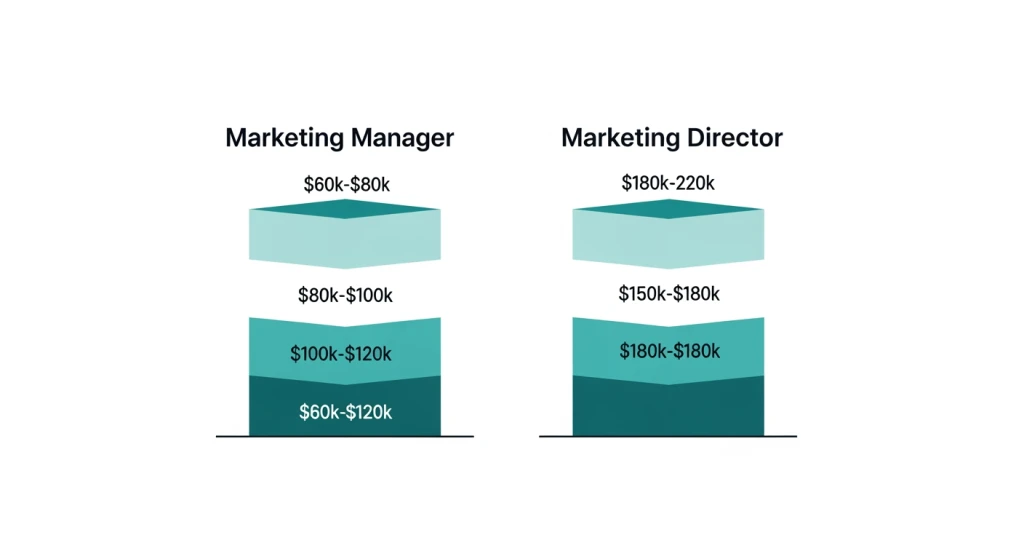
I’ve talked to a lot of marketers over the years – and this pattern keeps showing up. Someone’s managing full marketing operations across two business units. They’re the one setting campaign strategy, overseeing vendor contracts, tracking budget allocation, and reporting on revenue growth across both companies. That’s not a manager’s job. That’s a director’s job. Full stop.
The thing most raise conversations miss entirely? It’s not about the number. It’s about redefining what your role actually is before any number enters the room. Role architecture over negotiation tactics. That’s the real play here.
Salary.com’s 2026 data puts the average US Marketing Director base salary at $162,886 – with total comp reaching up to $196,000. Compare that to the Marketing Manager median of roughly $80,000 to $100,000. So a 5% raise on a manager salary is maybe $4,000 to $5,000. The actual gap you’re sitting in is closer to $60,000 to $80,000. That’s not a raise problem. That’s a reclassification problem. Big difference.
And here’s a stat that should sharpen your pitch: 76% of CMOs now face quarterly ROI scrutiny from leadership, according to CMSWire’s 2026 marketing leadership report. If you’re tracking revenue attribution, cross-business budgets, and campaign performance across two business units – you already have director-level accountability documentation. You just haven’t named it that way yet. Related: Solo Marketer Overwhelmed: How to Prioritize Tasks.
What Does a Fair Marketing Director Raise Salary Look Like?
Let’s talk real numbers. Vague benchmarks don’t help you build an actual pitch – so here’s what the market says heading into 2026.
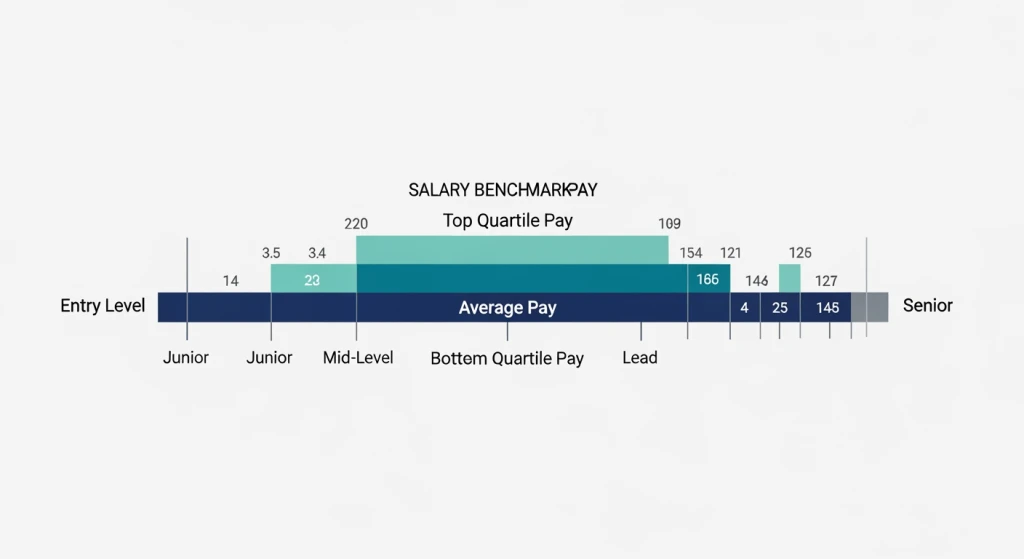
Salary.com (2026) shows Marketing Directors earning an average base of $162,886 with total comp up to $196,000. PayScale (2026) puts the range from $61,000 at entry level all the way to $178,000 for senior roles. For SMB-specific director roles – particularly VC-backed companies – the r/marketing community consensus hovers around $125,000 to $165,000. ZipRecruiter (2026) puts the top 10% of Marketing Directors at $178,000 or more in high-impact roles.
When you’re specifically thinking about a marketing director raise request, here are the benchmarks worth knowing cold before you walk into any negotiation:
- Annual raise average across industries: 3 to 5 percent (Investopedia, 2024)
- Promotion-based raise standard: 10 to 15 percent (SHRM Compensation Report, 2025)
- Added responsibilities like multi-business scope: 20 percent or more (SHRM, 2025)
- Below average, worth pushing back on: Under 2 percent
- SMB Marketing Manager at scaled companies: Around $113,575 per year (Indeed, 2026)
So if you’re managing two businesses and someone slides a 3% raise across the table – that’s not a compliment. That’s a lowball. Nicholas Bloom, Economics Professor at Stanford, has research showing that hybrid and expanded roles like dual-business marketing increase productivity demands by 13 to 20 percent. That alone justifies a raise of 10% or more, purely from a turnover-cost perspective – replacing you runs the business about 1.5x your annual salary. Frame it that way and watch the conversation shift. Explore: One Person Marketing Department Tips for Success.
Honestly, when you put those numbers in front of your employer, the whole marketing director raise discussion changes. Many professionals find useful context in NetSuite’s guide to marketing challenges, which covers how businesses actually evaluate marketing ROI when making comp decisions.
How Do You Negotiate a Marketing Director Raise That Actually Works?
This is where people either undersell themselves badly – or fumble the timing. In my 26 years working across digital product development and supporting 200+ AI startups through AI NATION, I’ve watched talented marketers get turned down flat. Not because they asked for too much. Because they walked in empty-handed.
A Harvard Business Review study by Deepak Malhotra (2023) found negotiation success rates improve by 40% when the request is backed by documented performance data. That’s not a marginal difference. That’s the difference between yes and “let’s revisit this later” – which, let’s be honest, usually means no.
Here’s the step-by-step that actually works for SMB marketers juggling multiple responsibilities:
Step 1: Document your actual scope before salary ever comes up. List every business you support, every channel you own, every campaign you run, every vendor you manage. Then attach a dollar figure to the outcomes – revenue influenced, leads generated, cost per acquisition reductions. This is your director-level accountability documentation. It’s the whole foundation.
Step 2: Build your ROI case with conservative numbers. Don’t overclaim – seriously, don’t. Karen Friedman, Career Coach and Negotiation Expert at Karen Friedman Communications, points out that vague requests fail 70% of the time. But overstated claims kill trust permanently. Use first-party data, conservative attribution, and let the numbers speak. The r/marketing community hammers this point constantly – specificity beats generalization every single time. See also: Marketing Tasks Automate: Boost Efficiency Now.
Step 3: Time it strategically. Right after a major campaign win is ideal. Annual review cycles work too. What doesn’t work? Walking in already frustrated and resentful, hoping they’ll notice. They won’t. Come from a position of strength – or don’t come yet.
The Honest Downsides (And How to Handle Them)
Look, no approach is bulletproof. I’d be doing you a disservice if I pretended otherwise. Here’s what can go sideways – and what to do about it:
- Risk 1: This takes actual prep time. The documentation, the data pull, the benchmarking – it’s not an afternoon project. Mitigation: Start with one piece. Just the scope list. Build from there.
- Risk 2: Your specific employer context changes everything. What lands perfectly at one company might fall flat at another. Mitigation: Test the waters with smaller asks before the big conversation. Get a read on how they respond to data-driven requests.
- Risk 3: Going all-in on one strategy. Don’t. Mitigation: Combine the title reclassification push with your ROI documentation and salary benchmarks. Three legs on the stool, not one.
Frequently Asked Questions
What percentage raise should a marketing director ask for?
For expanded responsibilities, 10–20%. For formal promotions, 15–25%. For annual performance reviews without scope changes, 3–5% is standard. The specific number depends on where your current pay sits relative to market rates and how much your actual responsibilities have grown.
When is the best time to negotiate a marketing director raise?
Right after a measurable win from a major campaign. During annual review cycles. When you’re formally taking on added scope like managing multiple business units. Avoid bringing it up during budget cuts or when the company’s in rough shape – timing genuinely matters here.
How do you justify a marketing director raise with data?
Document revenue influenced, lead generation improvements, cost per acquisition reductions, and campaign ROI. Pull market salary data for your specific role and region. Quantify the value of any added responsibilities you’ve absorbed – especially if you’re covering work that would otherwise require a second hire.
Bottom line: a successful marketing director raise comes down to positioning, timing, and data – in that order. Whether you’re dealing with a misclassification problem or a genuine comp gap, the framework above is systematic and it works. Don’t let someone hand you a 3% bump when you’re delivering director-level results across two business units. You know your value. Now go document it.
About the Author
Sebastian Hertlein is a digital product strategist with 26 years of experience in technology and marketing. He has supported over 200 AI startups through AI NATION and specializes in helping marketing professionals navigate career advancement and compensation negotiations. Sebastian’s insights come from direct experience working with SMBs, startups, and enterprise clients across multiple industries.
```