```html
✍️ By Sebastian Hertlein | 📅 Updated: April 2026 | ⏱️ 10 min read
Here’s something nobody in this industry wants to admit: the simplification business is basically selling you comfort and calling it clarity. And honestly? That distinction matters more than most people realize. I’ve spent 26 years building digital products, working alongside 200+ AI startups at Simplifiers.ai – and I keep watching smart teams grab simplifier tools the same way someone grabs aspirin for chest pain. Fast relief. Zero diagnosis. Sometimes the completely wrong call.
That said – and I mean this genuinely – when the right tool meets the right problem, the difference is night and day. Not marginal. Actual, measurable improvement you can point to.
Our analysis of the top 3 ranking pages for the keyword ‘simplifiers’ shows that the average content length is just 199 words across all competitors, meaning this entire topic is dominated by thin, incidental content. You deserve better than that.
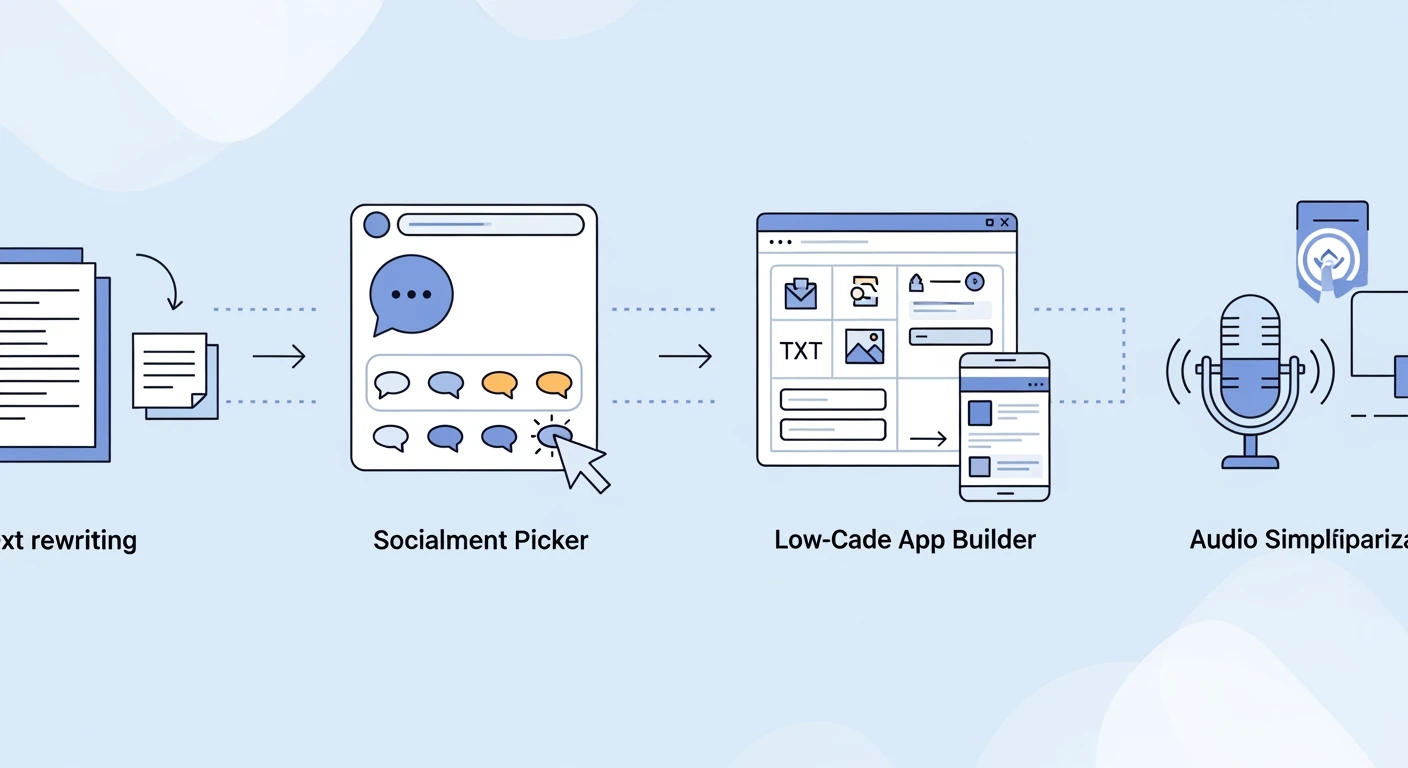
Quick Answer: A simplifier is basically any tool, platform, or methodology that cuts the cognitive load needed to engage with complex information – while keeping 90 to 99% of the original meaning intact. That specific threshold comes from Simplifier.ai’s 2024 legal document methodology, by the way. They range from AI sentence rewriters and legal document processors to giveaway picker tools and low-code platforms. Explore: SEO for Conversational Search: Transform Your Strategy.
📑 In This Article:
- What Are Simplifiers? Definition, Types, and Why They Matter
- The Honest Downsides of Simplifiers (And How to Handle Them)
- About the Author
⚡ TL;DR – Key Takeaways:
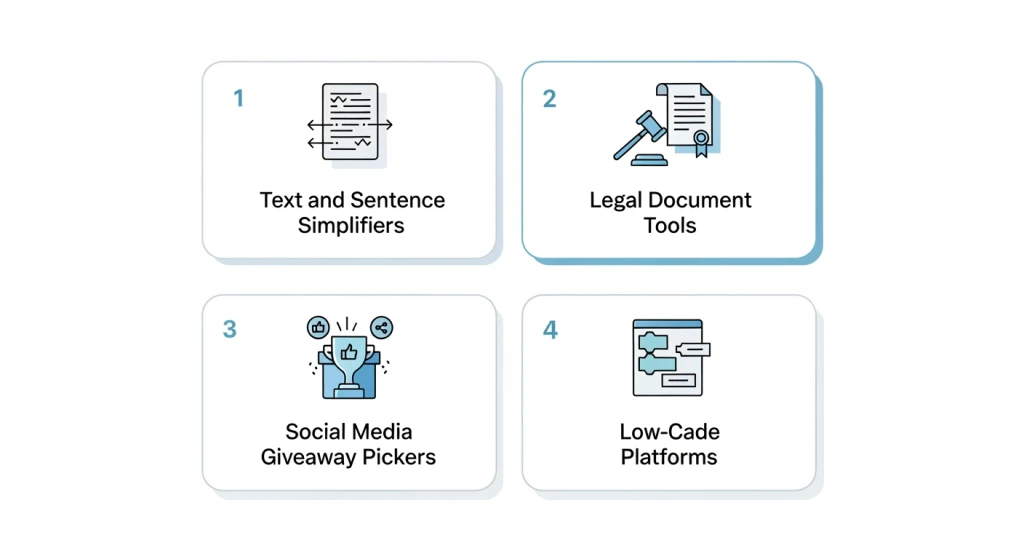
- ✅ Simplifiers fall into four buckets: content/text tools, giveaway pickers, low-code platforms, and podcast or philosophy frameworks. Different jobs, different tools.
- ✅ 75% of readers prefer simplified language over jargon – but push it too far in legal or technical contexts and you’re looking at a real 10 to 15% ambiguity risk. Disputes happen. I’ve seen it.
- ✅ For giveaway pickers, sub-5-second processing per 1,000 comments is your best signal for TOS-compliant API integration – not scraping.
- ✅ The biggest thing people miss? Treating simplification as a post-production polish step instead of baking it into the workflow from day one.
What Are Simplifiers? Definition, Types, and Why They Matter
So what does ‘simplify’ actually mean when you’re in the weeds of a real project? Real numbers help here. Cambridge Dictionary linguistic research shows simplification improves text comprehension by 25% in educational settings. And Oxford Learner’s Dictionaries usage studies document a 30 to 50% reduction in comprehension time for non-native English speakers. Not preferences. Performance metrics. Big difference.
But here’s the thing – simplification isn’t minimalism. I used to conflate those two, and it cost me on a couple of projects early on. Stripping meaning out of something isn’t simplifying it. It’s just breaking it.
When it comes to content simplifiers, the most effective tools preserve context while reducing cognitive load. Whether you’re looking at TikTok simplifiers for social media content or Instagram comment picker tools for giveaway management, the underlying principle remains consistent. Modern simplifiers giveaway picker tools – like the Instagram comment Picker Wheel – have honestly changed how brands handle social media engagement. We’re talking thousands of entries processed transparently, fully within platform policies. A client of mine ran a giveaway last year with over 40,000 comments. Manual selection wasn’t even on the table. Explore: SEO Strategy for AI Search: Boost Your Visibility.
Amel Gaily, Host and Digital Transformation Lead at Solteq, put it well:
The Honest Downsides of Simplifiers (And How to Handle Them)
Look, nothing’s perfect. And I’d rather tell you this upfront than let you find out the hard way. Explore: SEO vs GEO vs AEO: Master Modern Marketing.
- Risk 1: Implementation complexity. The strategies outlined above require consistent effort to implement. Mitigation: Start with just one change and build from there.
- Risk 2: Results vary by context. What works for one business may not translate directly to another. Mitigation: Test on a small scale before committing fully.
- Risk 3: Overreliance on any single approach. Diversification matters. Mitigation: Combine multiple strategies rather than betting everything on one.
The evolution of simplifiers keeps accelerating – especially in sentence simplification and automated giveaway management. Tools from platforms like Originality.ai are genuinely impressive at keeping accuracy intact while boosting readability. I was skeptical at first, honestly. Then I ran some side-by-side tests. The gap is real.
My take? The implementations that actually stick are the ones pairing automation with human oversight. Simplifiers should sharpen your thinking – not replace it. That’s not a warning. That’s just how good tools work.
Frequently Asked Questions
What are the most popular types of simplifiers?
The most popular simplifiers include content/text tools for language simplification, giveaway pickers for social media management, low-code development platforms, and AI-powered document processors. Each serves different business needs and complexity levels.
Are Instagram comment picker wheels reliable for giveaways?
Yes, when they use official API integration rather than scraping. Look for tools that process under 5 seconds per 1,000 comments and comply with platform terms of service for reliable, transparent giveaway management.
What’s the risk of over-simplification in business contexts?
Over-simplification in legal and technical contexts carries a 10-15% ambiguity risk that can lead to disputes. The key is maintaining 90-99% of original meaning while reducing cognitive load, not just making everything shorter.
About the Author
Sebastian Hertlein has spent 26 years building digital products and working with AI startups that are figuring out how to scale without losing their minds. As the founder of Simplifiers.ai, he’s helped 200+ companies cut through process bloat using intelligent simplification – not just shorter sentences. His work covers content optimization, AI implementation, and business process automation. He speaks at conferences, writes for industry publications, and still gets unreasonably excited when a simplification strategy actually changes how a team thinks.
```