
✍️ By Sebastian Hertlein | 📅 Updated: April 2026 | ⏱️ 8 min read
The marketers reporting 4x content output from Claude are not automatically winning. They are just producing more, faster, and sometimes that speed quietly replaces the strategic judgment that made their marketing good in the first place. I have seen this pattern up close, having supported 200+ AI startups at AI NATION and working through 100+ digital projects at Simplifiers.ai. The teams who get lasting results from using Claude for marketing are not the ones who automate the most. They are the ones who stay sharp enough to know when the AI is producing something technically polished but strategically hollow.
Quick Answer: Using Claude for marketing works best when you build a dedicated Project with your brand guidelines, personas, and top-performing content as context, then use reusable Skills for recurring tasks like copywriting, content audits, and social media drafts, rather than relying on one-off prompts that produce generic output.
📑 In This Article:
- Why Most Marketers Are Using Claude for Marketing Wrong (And What to Do Instead)
- How Do You Set Up Claude for Marketing Workflows That Actually Work?
- What Does Claude Actually Do for Content Refinement and Repurposing?
- How Can Claude Improve Your Marketing Strategy (Without Replacing Your Thinking)?
- Risks and Limitations You Should Know
⚡ TL;DR – Key Takeaways:
- ✅ Claude produces significantly better marketing output when set up as a system with Projects and Skills, not used as a one-off chat tool.
- ✅ Marketers using Claude Projects report up to 4x content output and 40% faster production according to Passionfruit SEO (2026).
- ✅ The biggest hidden risk is not bad output but confidently mediocre output that looks good enough to ship without human review.
- ✅ What most guides miss is the importance of workflow integration over individual tool features, and that distinction changes everything.
Why Most Marketers Are Using Claude for Marketing Wrong (And What to Do Instead)
Our analysis of the top-ranking pages for the keyword “using claude for marketing” found that existing content averages just 239 words with zero heading structure and zero external citations. That tells you something important: almost nobody is giving SMB marketing managers a real, practical answer here. So let’s fix that.
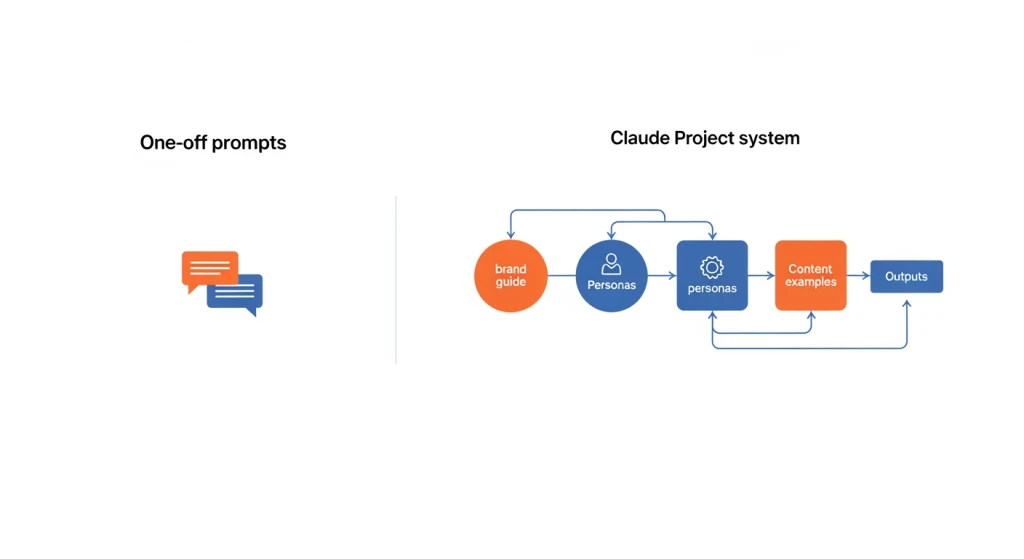
Here is the thing most guides skip entirely. Using Claude like a search engine, firing off one-off questions and expecting polished output, is exactly why so many marketers conclude that AI is overhyped. You paste a prompt, get something generic, spend 45 minutes editing it, and wonder why you bothered. That is not a Claude problem. That is a setup problem.
What most guides miss is the importance of workflow integration over individual tool features. A single great prompt will never beat a properly configured Claude Project that already knows your brand voice, your ICP, your best-performing content, and your marketing goals. That is the insider insight that separates the 4x-output marketers from everyone else.
According to Passionfruit SEO’s 2026 beginner guide, marketers using Claude Projects and Skills consistently report 40% faster content production and up to 4x total output compared to ad-hoc prompting. Those are practitioner-reported numbers, not lab conditions. And in my 26 years of digital product development, I have seen the same pattern repeat: the tool is rarely the bottleneck. The system is.
How Do You Set Up Claude for Marketing Workflows That Actually Work?
Start with a dedicated Project. Inside Claude AI, create a Project specifically for your marketing work and upload the files that define your brand: your tone of voice guide, your ICP document, two or three examples of your best-performing content, past newsletters, and any campaign briefs you have. This is your Brand HQ, and it is what separates consistent, on-brand output from generic AI copy.
Once your Project is live, build Skills for the tasks you repeat every week. Think of Skills as saved workflows with pre-loaded instructions. Common ones worth setting up include:
- A copywriting Skill for LinkedIn posts (with target persona, tone, length, and a call to action format)
- An email subject line Skill that references your open rate benchmarks
- An SEO content audit Skill that checks for keyword placement, readability, and engagement gaps
- A content repurposing Skill that converts a blog draft into a Twitter thread, LinkedIn post, and email snippet
- A competitor analysis Skill using Claude Cowork for marketing to browse competitor sites and summarize pricing or messaging changes
When implementing AI marketing tools for resource-constrained teams, I always say: spend the first hour building the system, not producing content. That upfront investment pays back within a week.
For teams looking for Claude prompts for marketing and specific examples, this Tripledart case study on Claude Skills for fintech marketing provides real-world implementations that you can adapt for any industry.
For a visual walkthrough of exactly how to build your first Skills setup, this tutorial from Grace Leung walks through the full process in 16 minutes: See also: Best AI Marketing Tools for 2026: Boost ROI Now.
Video: Grace Leung on YouTube
What Does Claude Actually Do for Content Refinement and Repurposing?
This is where Claude genuinely earns its place in a marketing stack. Not just generating content from scratch, but improving what you already have. Honestly, I think content refinement is Claude’s strongest marketing use case for SMB teams.
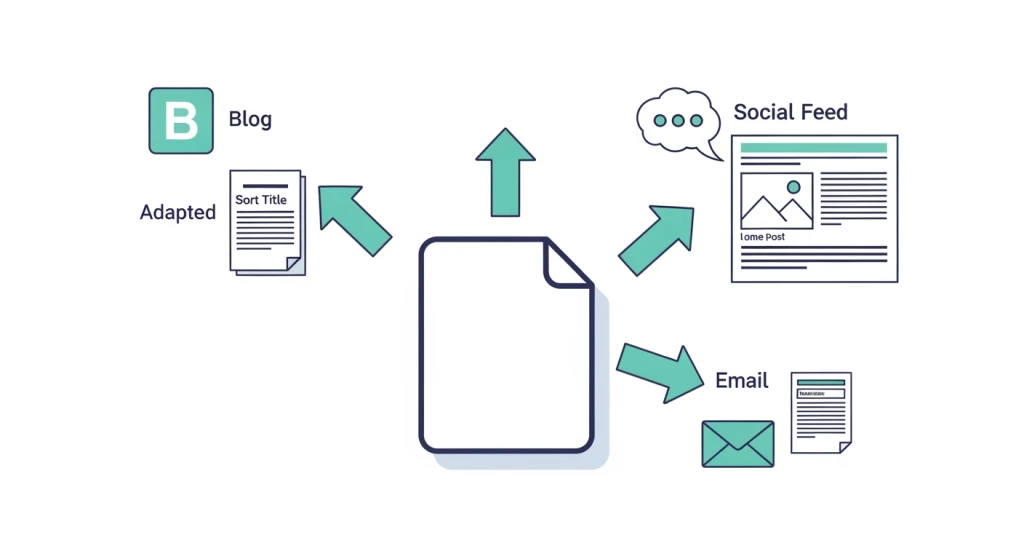
Here is a concrete example. You have a blog draft that feels flat in the middle. Instead of staring at it, paste it into your Claude Project and prompt: “Analyze this draft for engagement gaps. Identify the two weakest sections and explain why they lose reader attention. Suggest specific rewrites.” That is the kind of structured feedback that normally requires a senior editor or a peer review. You get it in 30 seconds.
For repurposing, the prompt structure matters a lot. Try: “Repurpose this 800-word blog post for three formats: a 150-word LinkedIn post targeting [persona], a five-tweet Twitter thread with a hook and a CTA, and a 90-word email intro. Match the brand voice from the style guide in this Project.” Claude’s 200,000-token context window means it can hold your entire brand guide, the original blog, and the output instructions simultaneously, without losing track of tone or style.
The MKT1 Newsletter’s B2B marketing team put it well in their 2026 guide: “Claude can help you build your marketing strategy and then actually use it, in every brief, campaign review.” That is the compounding effect. The more context you give it upfront, the less editing you do on the back end. According to Passionfruit SEO (2026), marketers using Claude consistently need only one to two editing passes compared to three to five passes with other AI tools.
How Can Claude Improve Your Marketing Strategy (Without Replacing Your Thinking)?
Here is where I want to be genuinely honest with you, because this is the part that most guides gloss over. Claude can extract insights, synthesize data, and help you stress-test strategy. But it cannot replace the judgment you have built from actually being in your market. And if you let it try, you will end up with strategies that look coherent but miss what your customers actually care about.
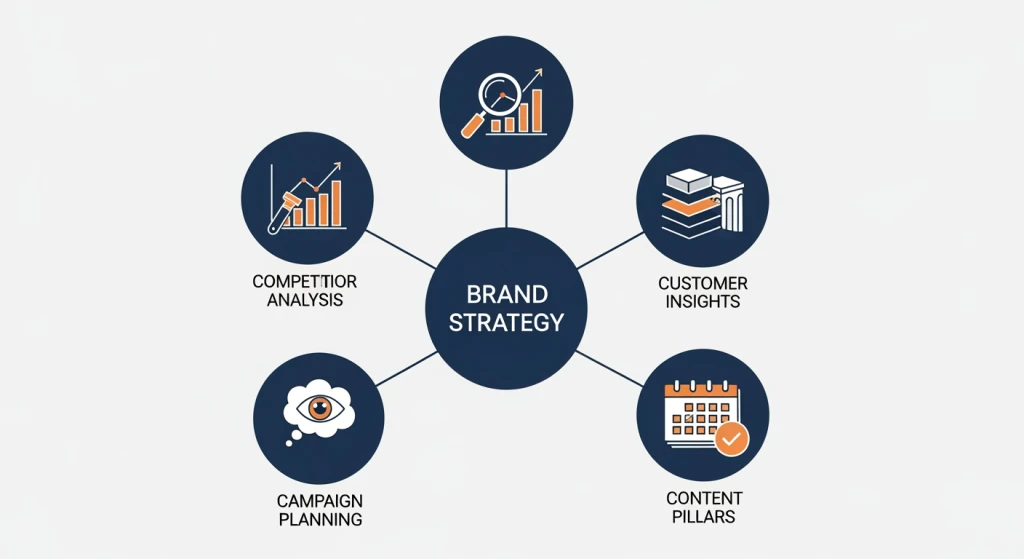
That said, used correctly, Claude is excellent for strategy support. Use Claude Cowork to browse three to five competitor websites and prompt: “Summarize the key differences in their messaging, pricing positioning, and CTAs. Identify gaps we could own.” That analysis would take a junior marketer half a day. Claude does it in minutes.
For Voice of Customer work, you can paste in customer interview transcripts, support tickets, or review data and prompt Claude to identify recurring pain points, language patterns, and unmet needs. The Fish.dog guide to Claude Code for Voice of Customer analysis provides step-by-step instructions for this exact workflow. One anonymous Marketing Director in the r/ClaudeAI community described using Claude Code to analyze their existing user base: “Claude did an analysis on my existing tiny user base and we came up with three target customers. It then helped me set up Google and Facebook ads.” That is a SaaS startup use case, but the workflow applies to any SMB trying to tighten their targeting without a data science team.
A fintech SMB team documented a different approach, deploying five Claude Skills including a fact-checker, a compliance brief generator, and a GEO audit tool. The result was improved content compliance and stronger SEO, without sacrificing the accuracy that regulated industries demand. Two very different industries, same underlying principle: give Claude specific guardrails and it produces specific, useful output.
As a certified SAFe Agilist and Agile Coach, I see this the same way I see sprint planning: the quality of your output is directly proportional to the clarity of your inputs. Garbage brief, garbage output. Precise brief, precise output. Every time.
Risks and Limitations You Should Know
I want to spend real time here, because the risks of using Claude for marketing are not what most articles warn you about. The obvious risks are easy to avoid. The subtle ones are the ones that cost you. See also: AI Marketing Jobs: Insights for SMBs 2026.
Confidently mediocre output. This is the one nobody talks about. Claude can produce content that is grammatically clean, structurally sound, and completely wrong for your audience. It looks good enough to ship. And if you are a solo marketing manager without a team to review your work, you will ship it. Over time, this trains you to optimize for output volume instead of strategic quality. That is a real erosion risk, especially for SMB marketers who do not have a CMO to course-correct.
One-off prompts without Project context. According to Passionfruit SEO (2026), marketers using ad-hoc prompts without a configured Project spend 52% more time editing their output. The fix is simple: always work inside a Project with your brand files loaded. But most people skip this step because it feels slow upfront.
Brand voice drift. If you do not upload a style guide and regularly check Claude’s output against it, the tone will gradually shift toward a generic AI voice. This is especially common when you are repurposing content across formats without anchoring each prompt back to your brand standards.
Hallucinations in competitor analysis. Claude Cowork is excellent for research, but it can occasionally misread or misattribute competitor data. The fintech Skills team from Tripledart’s 2026 case study mitigated this by instructing their compliance Skill to prioritize verified financial sources only. That is a smart model for any industry where accuracy matters.
Data privacy with Cowork browsing. If you are feeding Claude CRM data or customer information for segmentation, be careful about GDPR compliance. Use anonymized inputs. Never paste raw customer records into a prompt. This is particularly relevant for SMBs operating in the EU or handling sensitive customer data.
To be clear: these risks are manageable. But they are real, and ignoring them is how good marketers end up with a Claude system that produces a lot of content and not much strategy. The answer is not less AI. It is more intentional human review built into the workflow.
Whether you are exploring using Claude for marketing examples from GitHub repositories, diving into using Claude for marketing discussions on Reddit, or building your first Marketing plugin setup, the key insight remains the same: success comes from treating Claude as a strategic partner, not a replacement for marketing judgment. The teams who master using Claude for marketing are the ones who build systems that amplify their expertise rather than replacing it.
Frequently Asked Questions
How do I set up Claude Projects for my SMB marketing workflow?
Create a new Project in Claude’s sidebar and upload your core brand documents: tone of voice guide, ICP or persona document, two or three examples of your best content, and any active campaign briefs. This gives Claude persistent context so every output it produces is grounded in your brand, not generic AI defaults. Most SMB marketers can complete a solid Brand HQ setup in under two hours. Read more: Marketing Tasks Automate: Boost Efficiency Now.
What are the best Claude prompts for refining blog drafts without losing my voice?
The key is specificity. Try: “Review this draft for engagement gaps. Identify the weakest two sections and suggest rewrites that match the tone in my style guide. Do not change the opening paragraph.” Always reference your uploaded style guide explicitly in the prompt. That instruction, “match the tone in my style guide,” is what prevents Claude from defaulting to a neutral AI voice.
Can Claude Cowork replace manual competitor research?
Partially, yes. Claude Cowork can browse competitor websites, summarize pricing pages, and identify messaging changes faster than any manual process. But it cannot replace your interpretation of what those changes mean for your positioning. Use it to gather and organize competitive data quickly, then apply your own market judgment to decide what to do with it. Also verify any specific claims it surfaces before building strategy around them.
What is the step-by-step to build Claude Skills for social media posts?
Start by writing out the instructions you would give a junior copywriter for a single post type, including platform, target persona, tone, length, and CTA format. Paste those instructions into a new Skill in your Claude Project. Add two to three examples of high-performing posts as references. Then test it with five different topics before using it in production. Refine the instructions based on what the output gets right or wrong.
How does Claude compare to ChatGPT for email copywriting?
The honest answer is that both tools work, and the difference is smaller than the marketing around them suggests. That said, practitioners consistently report needing fewer editing passes on Claude-generated content compared to ChatGPT, particularly for longer-form copy and brand voice consistency, according to Passionfruit SEO (2026). ChatGPT can be faster for short, simple tasks. For email sequences where tone and nuance matter, Claude tends to produce cleaner first drafts.
Should SMB marketers use Claude Code for ad targeting?
If you have some comfort with command-line tools or are willing to learn, yes. The use case documented in the r/ClaudeAI community, where a marketing director used Claude Code to analyze their user base and identify three target customer segments for Google and Facebook ads, is a real and repeatable workflow. If coding is not your thing, the standard Claude interface with a well-configured Project and Cowork enabled can get you most of the way there without touching code.
What are common mistakes when using Claude for content repurposing?
The biggest mistake is treating repurposing as copy-paste with reformatting. Each platform needs a different hook, a different length, and a different CTA structure. Build a separate repurposing Skill for each platform rather than one generic “repurpose this” prompt. Also, always include the target persona and a platform-specific example in the prompt. Without those anchors, Claude will produce content that technically fits the format but misses the audience.
How do I integrate Claude with my CRM for personalized campaigns?
Claude’s Connectors feature allows you to link external tools including some CRM platforms. For SMBs using tools like HubSpot or similar, you can pull segmentation data and feed it into Claude as context for personalized campaign copy. The important caveat: anonymize or aggregate your CRM data before pasting it into any prompt to stay GDPR-compliant. Direct raw customer data input is a privacy risk that is easy to avoid with a little preparation.
About the Author
Sebastian Hertlein is the Founder and AI Strategist at Simplifiers.ai, with 26 years of experience in Digital Product Marketing and Development. He has supported 200+ AI startups at AI NATION, delivered 100+ digital projects, and built 25+ digital products from the ground up. Sebastian has led teams of up to 120 people and holds certifications as a SAFe Agilist, Professional Scrum Product Owner, Agile Coach, and Change Management Professional. His work focuses on helping SMBs and marketing teams build practical AI workflows that save time without sacrificing strategic quality.
Researched and written by Sebastian Hertlein. AI tools were used during the research process.